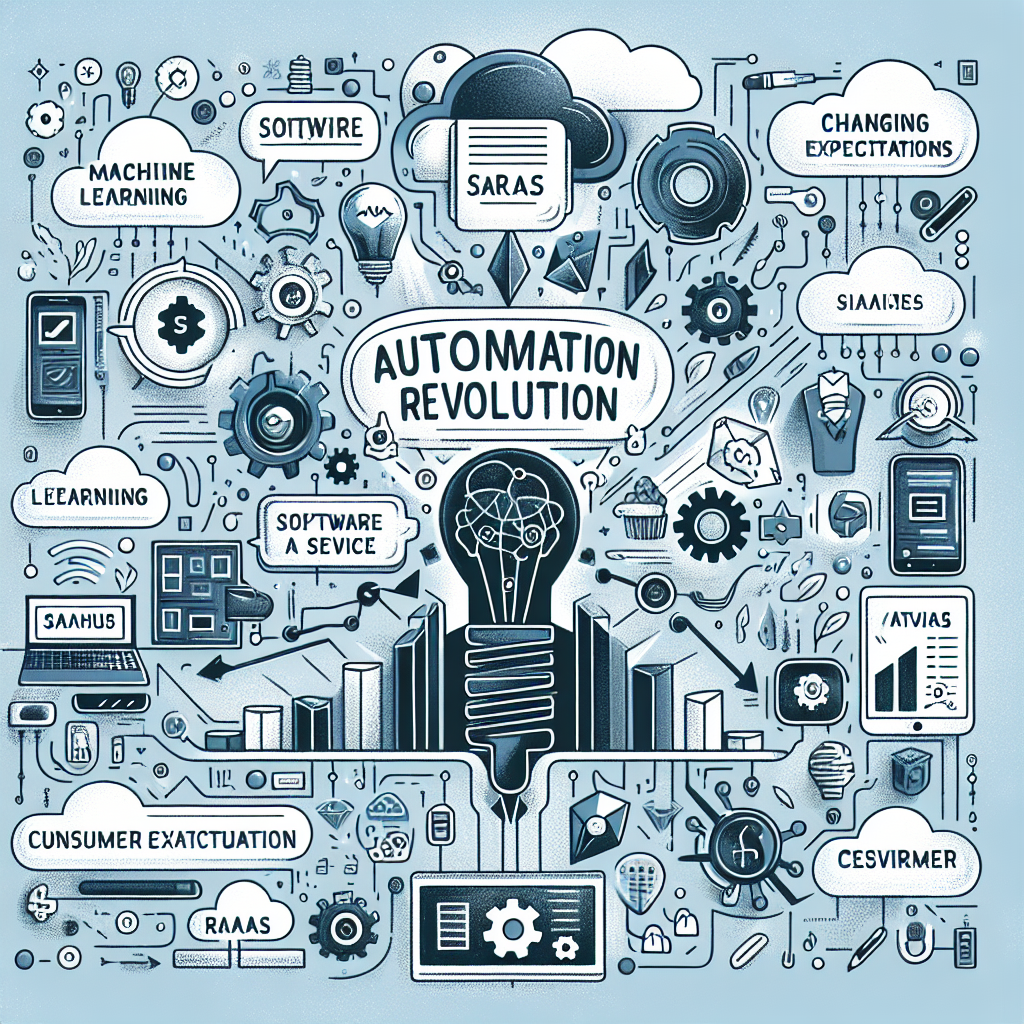
The Automation Revolution: Rethinking SaaS Business Models in Response to Evolving Consumer Expectations by 2026
As we approach 2026, the landscape of the Software as a Service (SaaS) industry is undergoing a seismic shift driven by rapid advancements in automation and changing consumer expectations. Companies are no longer just competing on features and pricing; they are now challenged to deliver seamless, automated solutions that enhance user experience and foster customer loyalty. This blog post explores how the automation revolution is reshaping SaaS business models and what companies must do to stay ahead of the curve.
Understanding the Automation Landscape
The automation trend is not just a buzzword; it’s a fundamental shift in how businesses operate. According to a report by McKinsey, up to 70% of tasks in various industries can be automated using current technologies. This potential for automation is influencing SaaS providers to rethink their offerings. Automation allows for improved efficiency, reduced operational costs, and enhanced product capabilities, which are increasingly important to consumers who demand speed and convenience.
The Rise of No-Code and Low-Code Platforms
One of the most significant developments in the SaaS space is the rise of no-code and low-code platforms. These platforms empower users—regardless of their technical expertise—to create and customize applications quickly. Gartner predicts that by 2026, 70% of new applications will be built on these platforms. This shift not only democratizes software development but also enables businesses to respond swiftly to changing consumer needs.
For instance, companies like Airtable and Zapier have leveraged no-code solutions to help users automate workflows without needing extensive programming knowledge. This trend reflects a broader expectation among consumers for tools that are not only powerful but also easy to use and adaptable to their specific requirements.
Consumer Expectations: The Demand for Personalization
As automation becomes more prevalent, consumers are expecting more personalized experiences from SaaS applications. According to a survey by Salesforce, 76% of consumers expect companies to understand their needs and expectations. This expectation is driving SaaS companies to integrate AI and machine learning into their platforms to analyze user behavior and tailor offerings accordingly.
Leveraging Data for Enhanced User Experience
Data is at the heart of personalization. By using analytics, SaaS companies can gain insights into user preferences and behaviors, allowing them to deliver targeted content and features. For example, HubSpot utilizes user data to provide customized marketing solutions, ensuring that businesses can reach their target audience effectively. The integration of automation in data analysis not only streamlines the process but also enhances accuracy, enabling companies to make informed decisions that align with consumer expectations.
Subscription Models: Flexibility and Value
As consumer preferences evolve, so too must SaaS subscription models. The traditional annual subscription is increasingly being replaced by flexible pricing plans that cater to varying user needs. According to a study by SaaS Capital, companies offering usage-based pricing are seeing higher growth rates, as they align more closely with how customers want to pay for services.
Implementing Tiered and Usage-Based Pricing
Tiered pricing models allow customers to select a plan that fits their usage patterns and budget, while usage-based pricing adapts to actual consumption. This flexibility can significantly enhance customer satisfaction and retention. For example, AWS operates on a pay-as-you-go model, allowing businesses to scale their services according to their needs without incurring unnecessary costs. Such models are not only appealing but also encourage organizations to experiment with SaaS solutions without the fear of long-term financial commitment.
The Role of Customer Support in an Automated World
With the rise of automation, customer support is also evolving. Automated chatbots and AI-driven support systems are now commonplace, providing instant assistance to users. However, while automation can improve response times, it is crucial for SaaS providers to maintain a human touch. A study by Zendesk reveals that 87% of consumers still prefer human support for complex issues.
Balancing Automation with Human Interaction
To create a successful support model, SaaS companies should aim to balance automation with accessible human support. For example, integrating AI chatbots for initial queries while offering easy access to human agents for more complex issues can enhance the overall customer experience. This hybrid approach not only meets consumer expectations for quick responses but also ensures that personalized support is readily available when needed.
Conclusion: Embracing Change for Future Success
As we look towards 2026, the automation revolution is set to redefine SaaS business models in profound ways. Companies must embrace automation not just as a tool for efficiency, but as a means to enhance user experience, foster personalization, and adapt to changing consumer expectations. By leveraging no-code platforms, embracing flexible subscription models, and balancing automation with human interaction, SaaS businesses can position themselves for success in an increasingly competitive market.
Actionable Takeaways:
- Invest in no-code and low-code platforms to empower users and enhance agility.
- Utilize data analytics to deliver personalized experiences that resonate with consumers.
- Consider flexible pricing models that cater to diverse user needs and consumption patterns.
- Balance automation with human support to provide comprehensive customer service.