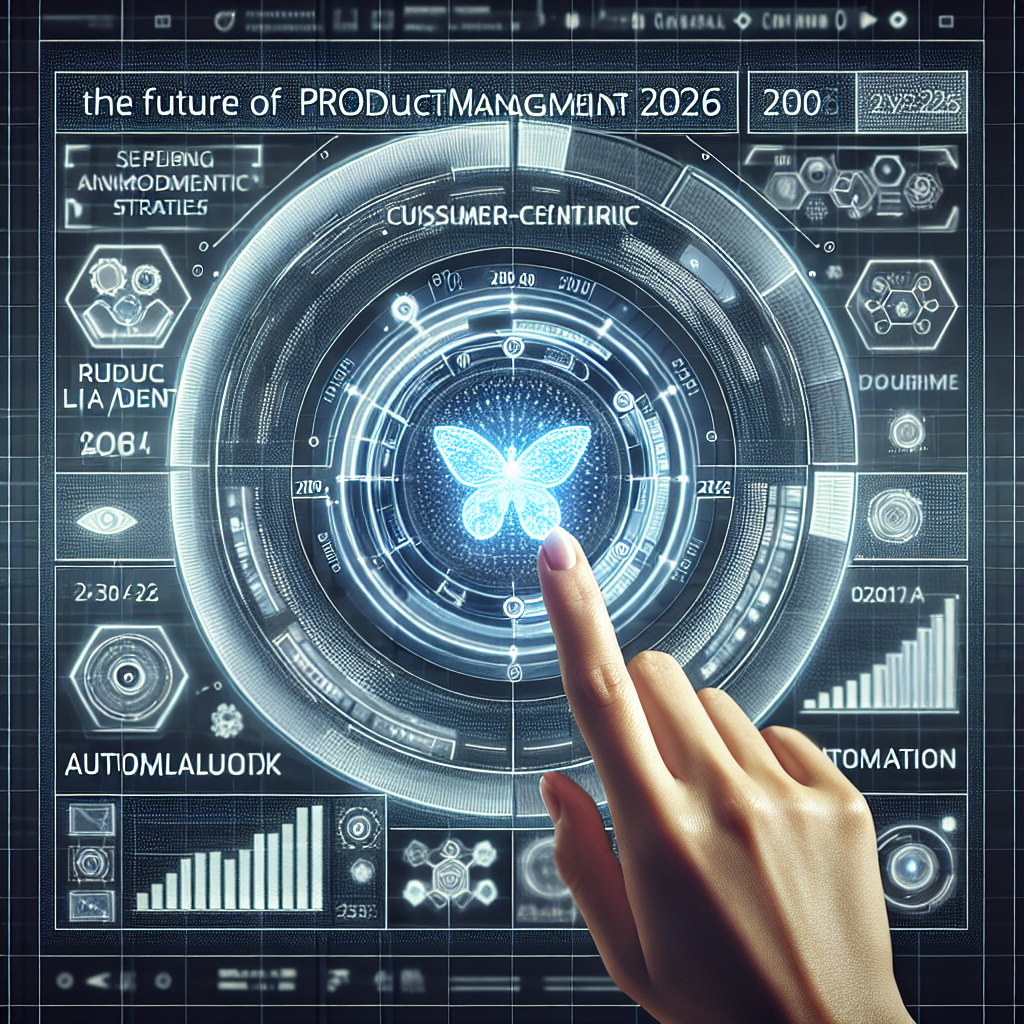
The Future of Product Management: How AI-Driven Insights and Automation Will Shape Consumer-Centric Strategies by 2026
As we venture deeper into the 21st century, the dynamics of product management are evolving at an unprecedented pace. With the rapid adoption of artificial intelligence (AI) and automation technologies, businesses are beginning to leverage these tools to enhance their decision-making processes and develop consumer-centric strategies like never before. By 2026, we can expect AI-driven insights and automation to redefine how product managers approach their roles, ultimately leading to more personalized and effective products in the marketplace.
The Current Landscape of Product Management
Today’s product managers face a myriad of challenges, from understanding consumer needs to managing cross-functional teams. According to a survey by Product Management Festival, 68% of product managers find it challenging to gather actionable insights from consumer data. With the explosion of big data, the ability to extract meaningful insights is more crucial than ever. Traditional methods of gathering feedback and conducting market research can be time-consuming and often yield results that are too late to influence product development cycles.
Enter AI and automation: technologies that not only streamline data collection but also provide real-time insights. As AI systems become more sophisticated, they can analyze consumer behavior and preferences, allowing product managers to make informed decisions swiftly. This shift is not just a trend; it's a fundamental change in how products are conceived, developed, and delivered.
AI-Driven Insights: The Heart of Consumer-Centric Strategies
By 2026, AI is expected to play a pivotal role in shaping consumer-centric product strategies. One of the most significant advantages of AI is its ability to analyze vast amounts of data quickly and accurately. For instance, tools like natural language processing (NLP) can sift through customer reviews, social media posts, and survey responses to identify trends and sentiments that might otherwise go unnoticed.
Personalization at Scale
In a world where consumers expect personalized experiences, product managers can utilize AI to tailor products and marketing strategies to individual preferences. A study by McKinsey indicates that personalization can lead to a 10-30% increase in revenue. By leveraging AI-driven insights, product managers can develop features that cater to specific consumer segments, enhancing user experience and retention rates.
Predictive Analytics for Better Decision-Making
Predictive analytics is another powerful application of AI that allows product managers to forecast market trends and consumer behavior. For example, using machine learning algorithms, companies can predict which features will resonate most with users or anticipate shifts in consumer demand. This proactive approach not only reduces risks associated with product development but also enables businesses to stay ahead of the competition.
Automation: Streamlining Processes and Enhancing Efficiency
Automation is set to revolutionize the operational side of product management. By automating repetitive tasks such as data entry, reporting, and project management, product teams can focus on strategic thinking and innovation. According to a report by Gartner, organizations that adopt automation in their processes can see productivity gains of up to 40%.
Enhanced Collaboration Across Teams
Automation tools can also facilitate better collaboration among cross-functional teams. Platforms that integrate project management, communication, and feedback loops enable product managers to align their strategies with marketing, sales, and customer support seamlessly. This cohesive approach fosters a culture of innovation where insights from different departments can inform product development.
Continuous Improvement Through Feedback Loops
Another critical aspect of automation is the ability to establish continuous feedback loops. By automating the collection of user feedback post-launch, product managers can quickly identify areas for improvement, iterate on existing features, and enhance product offerings. This agile methodology ensures that products evolve in line with consumer expectations, ultimately leading to higher satisfaction rates.
Preparing for the Future: Skills and Mindsets Required
As the role of product management transforms with AI and automation, professionals in the field must adapt by acquiring new skills and mindsets. Embracing a data-driven approach will be essential. Product managers will need to become proficient in interpreting data analytics and leveraging AI tools to make informed decisions.
Moreover, a strong focus on collaboration and communication will be vital. As teams become increasingly cross-functional, the ability to work effectively with diverse groups will enhance product outcomes. Cultivating a mindset of agility and adaptability will also be crucial, as product managers must be prepared to pivot strategies based on real-time insights.
Conclusion: Embracing the AI Revolution in Product Management
The future of product management is undeniably exciting, with AI-driven insights and automation poised to reshape consumer-centric strategies by 2026. As product managers begin to embrace these technologies, they will not only enhance their decision-making processes but also create products that resonate deeply with consumers.
To thrive in this evolving landscape, product managers should focus on developing data literacy, fostering collaboration, and maintaining an agile mindset. By doing so, they can harness the power of AI and automation to drive innovation and deliver exceptional value to consumers. The time to prepare for this transformation is now—embrace the future, and lead your organization into the new era of product management.