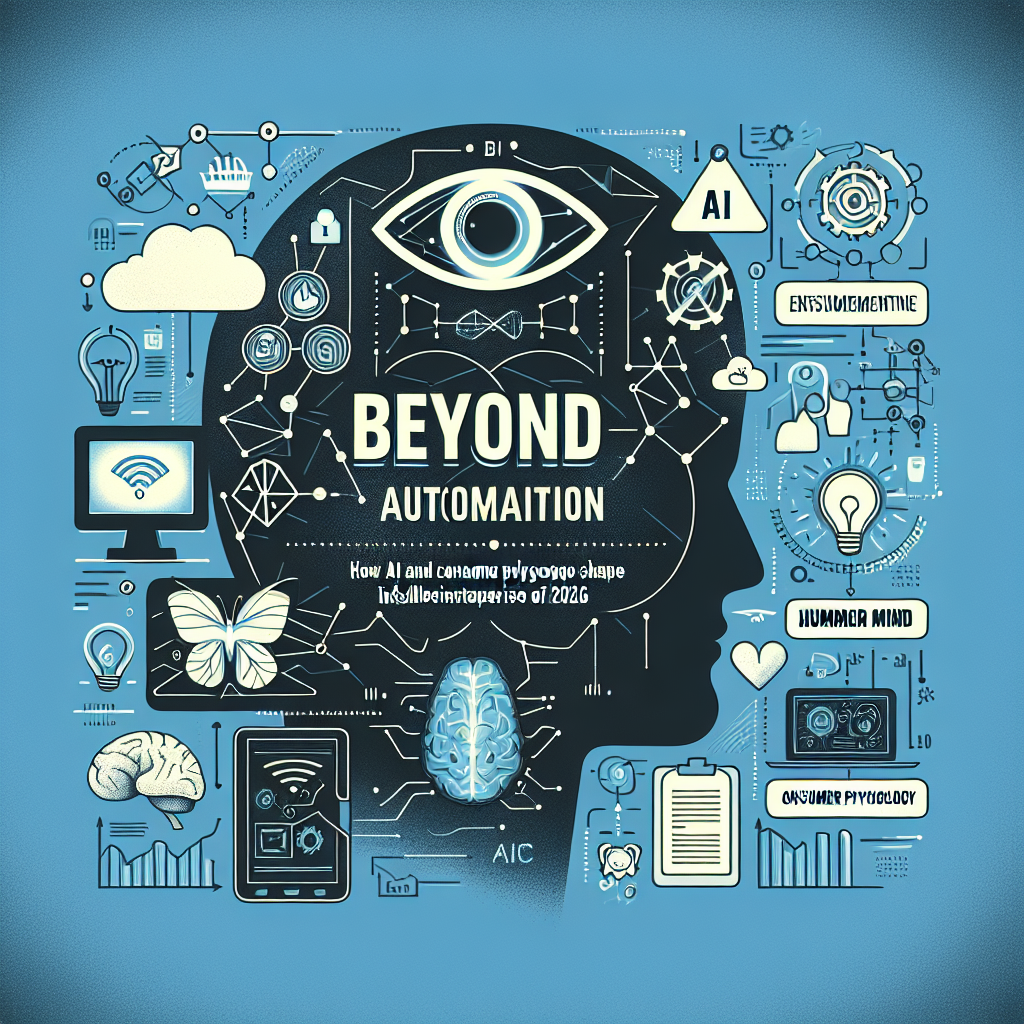
Beyond Automation: How AI and Consumer Psychology Will Shape the Intelligent Enterprises of 2026
As we stand on the precipice of a new era defined by rapid technological advancements, the landscape of business is undergoing a seismic shift. By 2026, the intelligent enterprise will not just be a buzzword but a reality driven by the fusion of artificial intelligence (AI) and consumer psychology. In this blog post, we will explore how these two powerful forces are set to redefine the interactions between businesses and consumers, create personalized experiences, and ultimately drive growth in unprecedented ways.
The Rise of Intelligent Enterprises
The concept of the intelligent enterprise refers to organizations that leverage data, AI, and analytics to optimize their operations, enhance customer experiences, and drive innovation. According to a report by Gartner, 80% of enterprises are expected to adopt AI technologies by 2026, enabling them to make data-driven decisions and automate complex processes. However, the future of intelligent enterprises goes beyond mere automation; it involves understanding and leveraging consumer psychology.
Consumer Psychology: The Heart of Business Strategy
Consumer psychology delves into the motivations, preferences, and behaviors of consumers. As businesses integrate AI into their operations, understanding consumer psychology will be crucial for creating effective marketing strategies and improving customer engagement. For example, a study by HubSpot found that 72% of consumers only engage with personalized messaging. Companies that harness AI to analyze consumer behavior and preferences will be able to tailor their offerings, making them more appealing to their target audience.
AI-Powered Personalization: The Future of Customer Experience
Personalization is no longer a luxury; it has become a necessity in today’s competitive market. AI enables businesses to gather and analyze vast amounts of data, offering insights into consumer behavior in real-time. By 2026, we can expect AI to deliver hyper-personalized experiences that cater to individual needs and preferences. For instance, platforms like Netflix and Amazon already use AI algorithms to recommend content and products based on user behavior, significantly enhancing user satisfaction.
Implementing AI for Enhanced Customer Engagement
To effectively use AI for personalization, businesses can implement several strategies:
- Data Collection: Utilize tools to gather customer data through various touchpoints, including websites, social media, and customer service interactions.
- Behavior Analysis: Employ AI-driven analytics to understand consumer behavior patterns, enabling businesses to predict future actions and preferences.
- Real-Time Engagement: Use AI chatbots and virtual assistants to engage with customers in real-time, providing them with instant support and personalized recommendations.
The Ethical Considerations of AI and Consumer Psychology
While AI offers tremendous opportunities, it also raises ethical concerns, particularly regarding consumer privacy and data security. As businesses gather more data to enhance personalization, they must be transparent about how this data is used. A survey by PwC reported that 85% of consumers would not do business with a company if they had concerns about its data practices. Intelligent enterprises of 2026 must prioritize ethical considerations and build trust with their consumers.
Building Trust Through Transparency
To foster trust, businesses should consider the following:
- Transparent Communication: Clearly communicate how customer data is collected, used, and protected.
- Opt-In Policies: Allow customers to choose how much data they share and for what purposes.
- Data Security Measures: Implement robust security measures to protect consumer data from breaches and misuse.
Preparing for the Intelligent Enterprise of 2026
As we move towards 2026, businesses must adapt to the evolving landscape shaped by AI and consumer psychology. Here are a few actionable takeaways for organizations aiming to thrive in this new era:
- Invest in AI Technologies: Begin integrating AI tools that align with your business goals, focusing on data analysis, customer interaction, and operational efficiency.
- Embrace a Customer-Centric Approach: Shift your business strategies to prioritize customer needs and preferences, utilizing insights gained from consumer psychology.
- Foster a Culture of Ethical Awareness: Educate your team on the importance of ethical data practices and consumer trust, ensuring that these values are embedded in your company culture.
Conclusion
The intelligent enterprises of 2026 will emerge as leaders by embracing the synergies between AI and consumer psychology. By prioritizing personalization, ethical practices, and customer-centric strategies, businesses can create meaningful connections with their consumers and drive sustainable growth. As we prepare for this exciting future, let us remember that technology should serve to enhance the human experience, making our interactions more intuitive, personalized, and trustworthy.